

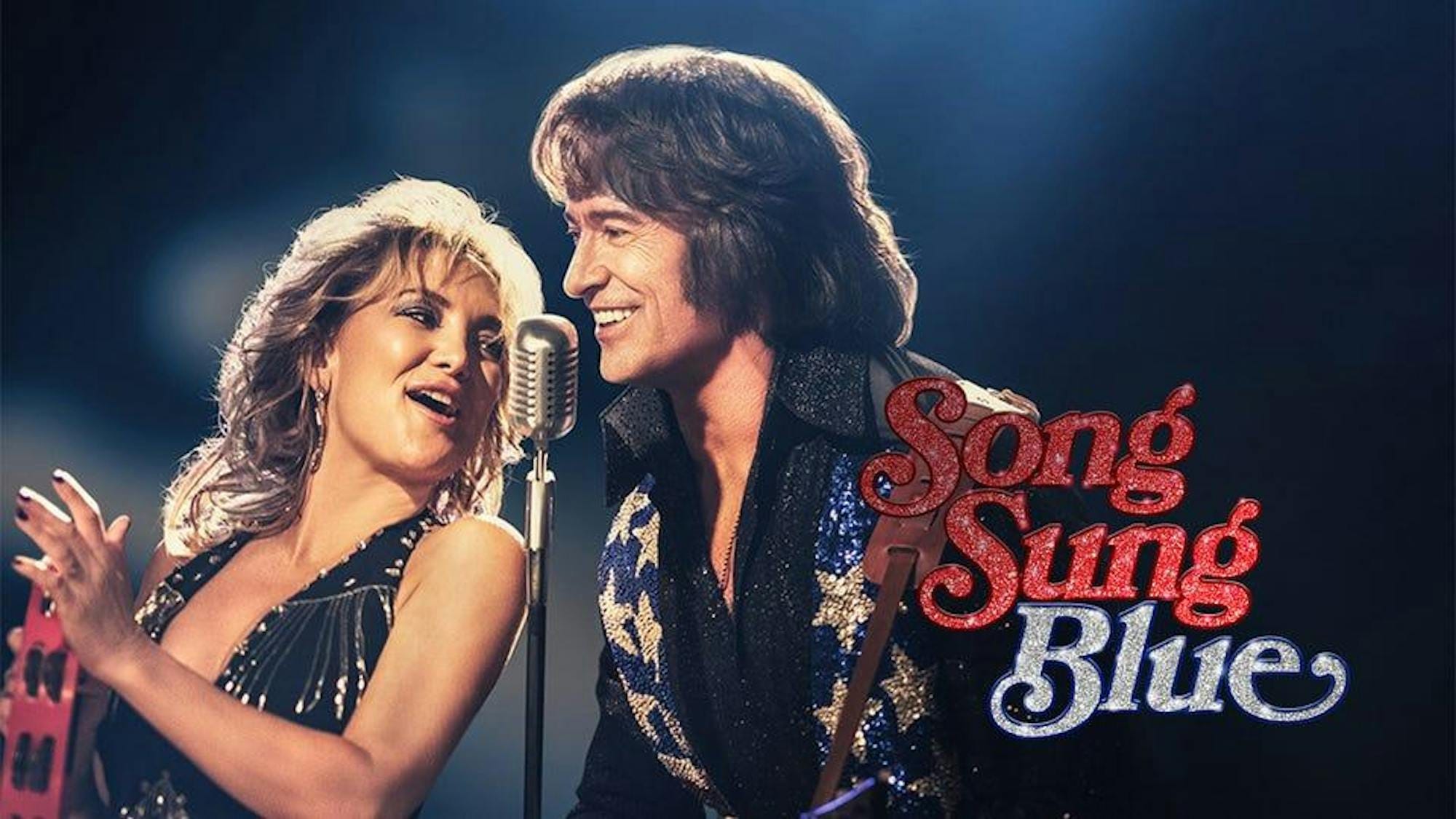
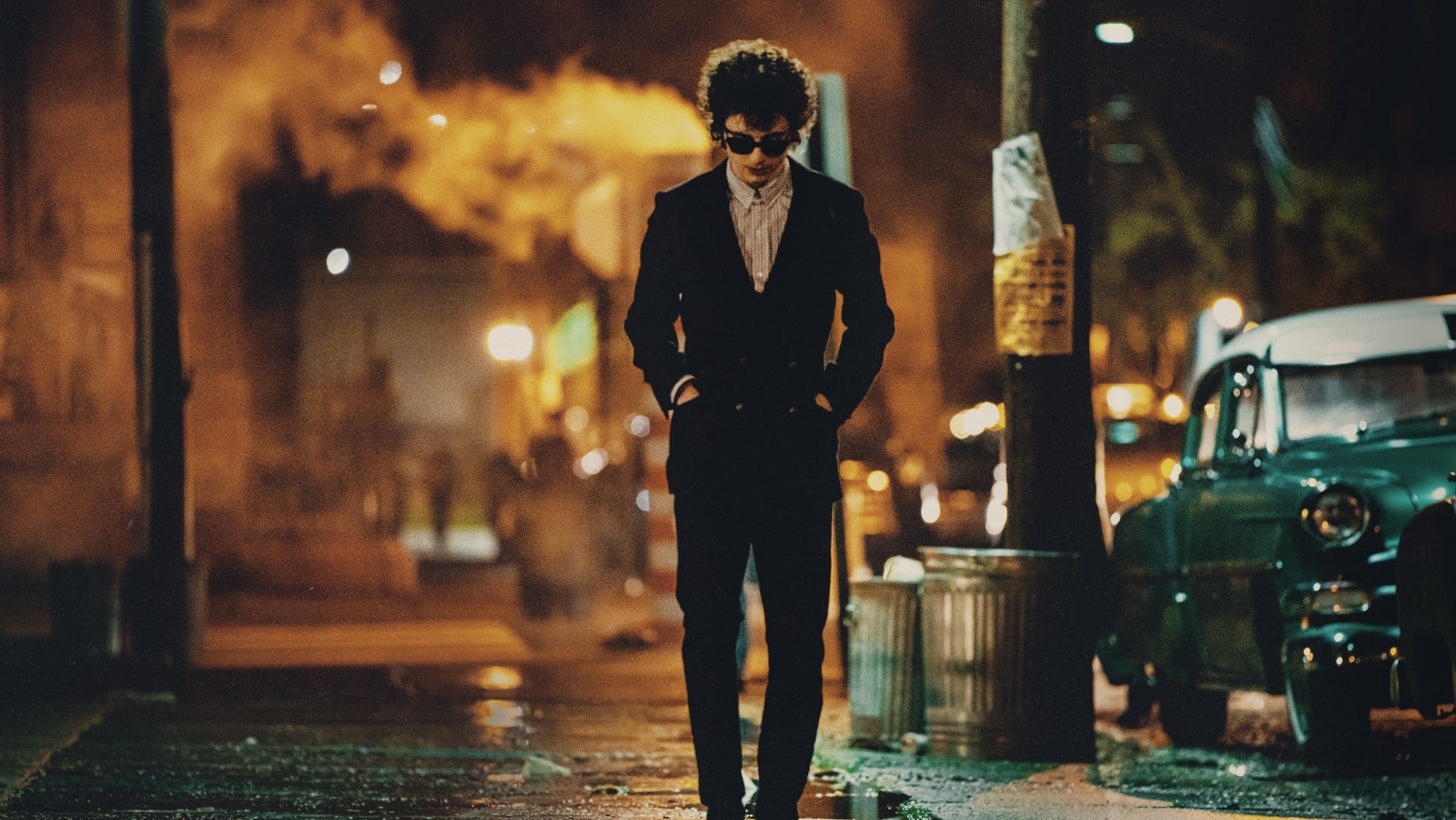
We just watched two movies back to back, A Complete Unknown and Song Song Blue. They’re both excellent, entertaining films about pop artists, and together they represent a fascinating dialogue about art itself.1
A Complete Unknown is, of course, about the rise of Bob Dylan, his fight to perform his music with integrity while still operating within commercial recording. It culminates with him turning his back on supporters and fans in a controversial performance that draws jeers and cheers by giving the audience exactly what they didn’t want, Dylan “going electric.”
Song Sung Blue is about a kind of loser rock’n’roll performer who stumbles his way into “reinterpreting,” if not impersonating, Neil Diamond, a pop singer who, however successful he may have been is often dismissed as a corny commercial hack (not my opinion). Based on a true story, the main character “Lightning,” has his own sort of artistic integrity, wanting to perform deep cuts of Diamond songs like “Soolaimon,” rather than the more popular “Sweet Caroline,” and, like Dylan, he also gets stuff thrown at him when he refuses to cater to the crowd’s demands.
The difference is, Lightening ultimately realizes that his role is to provide joy—that is his art, and he finds ways to compromise without selling out, so that the climax of this film is a joyous performance full of deliciously entertaining kitsch.
The whole thing is complicated in Song Sung Blue by the intervention of Eddie Vedder, who makes famous Lightning and Thunder (the latter is the former’s partner) when he invites them to open for Pearl Jam.
Pearl Jam, is itself, a kind of bridge between alternative and pop music, and when Lightning demurs at playing before Vedder’s younger, grungier audience, Vedder says something like, “don’t worry, there are no rules,” which is a profoundly Dylanesque way to encourage something as uber pop as a Neil Diamond “interpreter.”2
I will admit, this is a question I struggle with both as a writer and a teacher. What is art? What is entertainment? How do we balance our artistic integrity with pleasing the audience?
Moreover, I’ll freely admit, I’m more on Lightening’s side than Dylan’s.
Dylan’s decision, for example, to “go electric” at a festival built on acoustic performances seemed unnecessarily hostile to me—at least as portrayed in the film. And I have heard Paul McCartney himself criticize Dylan for not playing his hits at more recent concerts.
McCartney who is not quite on the Neil Diamond end of the spectrum, nonetheless, is a devoted pop artist, and said something like, “You should give audiences what they paid for,” which is more of a transactional equation than I like. I’d put it more like, “give audiences what gives them joy.”
And yet, in my own writing, I struggle with this. I’ve written a novel so niche no one seems to want to touch it, and as I wrote it, I was like, screw it, I’m going to write this to please myself. And, apparently, that’s the only one it pleased.
More recently, I had a friend question me about my short story, Tree Candles. He said he enjoyed it, but was surprised, despite being a Lubavitcher, to see that some of the vocabulary in the story reference Chassidism.
“Who is your intended audience?” he asked, understanding that the seemingly obscure references might lose me some readers.
“I’m not sure,” I said. “Whoever likes the story.”
Artistic integrity or artistic stupidity? I’m honestly not sure.
Trust me, I’m not comparing myself to Dylan or Diamond. I don’t have the drive and devotion, much less talent, of either. But I find myself endlessly fascinated by the question of when does art cease to be art and become self-indulgence, when does entertainment cease to become entertainment and become pandering?
My classic example of art going too far is Finnegans Wake, James Joyce’s all but unreadable novel. What’s the opposite? I’ve recently read some fantasy writers who seemed to me to be pandering, but I’d rather not name them.
For my own part, I sympathize more with Song Song Blue than A Complete Unknown. But that’s probably predictable for a notorious lover of the Monkees—the Thinking Man’s Beatles.
But maybe the dichotomy is not real. Maybe it works this way.
The artist always first sets out to entertain themself. But some artists find a large audience who are entertained by what entertains them. And some don’t. The former is “success.” The latter is, well, something else. Not failure, perhaps.
Lighting and Thunder weren’t by the standards of Dylan or Pearl Jam successful at all. But they seemed pretty pleased with where they arrived.
Who is successful? Maybe, to paraphrase “The Wisdom of the Fathers,” one who is satisfied with his audience.
In the meantime, treat yourself to a listen.
They are also showcases for the amazing talent of the actors who not only bring to life people they are not, but display impressive vocal and musical skills
Thanks to my own Eddie for pointing out this missing link in the first draft of the article.
Thought-provoking post! I think we tend to unconsciously downgrade art that is entertaining. It's why good comedy isn't respected nearly as much as it should be (or wasn't, until every no-talent stand-up decided he was "speaking truth to power"). I don't think we should have to choose. But then, I find *Hamlet* and *The Waste Land* entertaining as well as deep. Of course, Shakespeare almost certainly saw his poetry as his 'real' art and not his plays, which were not taken seriously as an art form in Elizabethan England, as you know.
It also reminds me a bit of my slight shock at your talking of "fan-service" in your *Odyssey* review. I happen to be very opposed to fan-service generally, particularly in *Doctor Who* (the only thing I'm a "real" fan of). I prefer the pristine purity of the early Doctor Who stories, before it developed a mythos and repeated tropes (joking not joking). I'm a kind of fandom Salafist, hearkening back to a mythical Golden Age (definitely joking).
Honesty demands making art for yourself. How can you make art for an “intended audience”? It’s not real art.